Some people call it a mantra; others, an affirmation but really, they are just slogans.
When you think about a company, you think about its slogan.
Nike: Just do it. Apple: Think differently. Adidas: Impossible is nothing. But what about you?
Your life is your company. You're the CEO of You Inc. When it comes to you, what slogan comes to mind?
What do you tell yourself about you how do you represent yourself during the bad, frustrating, stressed out and disappointing times? Can you continue to send yourself empowering messages during your worst days?
What are some negative phrases you tell yourself? Negative phrases are so dangerous not just because they are negative but because they hypnotize us.
We start to say negative phrases so much so convincingly that we start to believe them. Over time, we unconsciously completely accept the negative self talk and we have officially created our own limits.
5 Personal Slogans to Help You Perform Your Best
Now what does success mean to you? The most fulfilled entrepreneurs and the most effective leaders all have the same focus: becoming the best version of themselves and helping others do the same. That's their brand.
But before we can do our best, we have to convince ourselves that being our best being awesome amazing and phenomenal is possible. And that we deserve it! Right here. Right now. That must be the company culture. So here are 5 personal slogans that can help you become the best version of you.
1. Take Another Step!
No matter how excited you are about your dream, it will take time. Accept it. People who don't accept it will quit from frustration. Greatness doesn't come overnight. As they say: if it were easy, everybody would do it. But one thing you can always do at any moment is to take another step. If you're feeling exhausted, take a step towards resting. If you're feeling stuck, take a step towards being re-inspired and letting your creativity flow again. If you're feeling hurt from the criticism and negative feedback from others, take a step towards rebuilding your confidence. When you refuse to step forward, you refuse your own progress. Take another step.
2. I can actually do this!
Put yourself out there. Do what you've been avoiding. Surprise yourself. As you're going through your process and failure seems like it's right around the corner, remind yourself that you can actually do this!
3. Failure teaches me.
Success can be dangerous because it fools us into thinking that we know what we're doing. The truth is whatever endeavor we are involved in, we are going to have to change evolve and learn constantly. Learn from your mistakes. Don't be scared of failure. Just focus on what you've learned and you will stay on the right track.
4. My work matters.
You will have massive doubt. One day you will feel strongly about something, then the next day you will wonder if your work and your dream really even matters. It does. But you have to remind yourself of that all the time. Your work is real. If you stop, if you quit, something is lost forever. Your work makes a difference. Keep going.
5. Other People's Success Inspires Me
Have you ever told someone some really good news and they just didn't seem to be excited? They said they were happy for you but you could tell they weren't. That will happen but it won't happen to you. Every time someone becomes successful, you're happy for them because you know it's going to have a positive impact on their lives and on the lives of others. And it's inspirational for you because it's just another reminder of what great things are possible. Why because we are a family and we believe in each and everyone of YOU!
Wednesday, June 24, 2020
Your Life Is Your Company. You're The CEO Of You by Randy Copeland


Tuesday, June 2, 2020
Productivity tips to kill procrastination and some random wisdom
1) Never say "I should", always say "I must".
2) Deadlines, you need deadlines for everything so that you see that you have less and less time available.
3) Visualize deadlines with countdown timers, buy a huge countdown timer
(I have a 100-day countdown timer, you need to see that go from 99
days, 23 hours, 59 mins, 59 secs to 0 days left).
4) Realize that "life is short" is not just a quote teens get tattooed; life IS short, and you're already late, so get to work.
5) You will only live about 900 months (75 years), if you're 25 years
old you've already wasted 300 months, and you'll be spending about 200
of the remaining 600 months SLEEPING, you do the math.
You're literally THAT CLOSE to being 60 years old without having ever done anything in your life.
6) You got one life, this is not a test life to prepare for the real one, this already is the real one.
7) You can achieve pretty much any goal in less than 3 years, that means
that if you start working today you will only be able to see the effect
of that action months from now, up to 3 years.
8) Fall in love with failure. Success comes from failing thousands of
times, not from doing stuff the right way on first try. Also, success is
not permanent, when you reach success you work to make sure you'll be
safe when things will go bad, 'cuz they will go very bad many times.
9) Anything you think you should be doing tomorrow or later today you
should've done that yesterday, last week, last month, last year. YOU'RE
LATE, so stop wasting your time.
10) Procrastination is you watching your life HAPPEN, not you LIVING
your life. And cool stuff doesn't just 'happen', you have to make it
happen.
11) Realize you ARE NOT your body, you're not your mind either, that's
why you say "my body" and "my mind", you know you're not your body, you
are YOU, your mind is a tool YOU use to analyze data and create new
thoughts and ideas, your body is the tool you use to make those ideas
real.
Take care of both like any tool that requires maintenance, you won't find spare parts easily.
12) You're late, but it's never too late. It's only too late when you think it's too late and you give up.
You never really fail if you keep going, you only fail when you stop failing, 'cuz that makes that last failure permanent.
13) Get the best sleep you can possibly get.
Friday, October 19, 2018
Uber Driver Reveals 24-Hour Money Manifestation Secret
If you're struggling paycheck to paycheck or feel trapped under a growing mountain of debt...
There's no need to worry any longer because spirit has got your back!
Starting in the next 24 hours after seeing this video, you WILL receive a financial blessing in your life...
I'm talking about receiving $500, $1,000, even up to $10,000 in beautiful, spendable cash!

Discover the concept behind Manifestation Magic. The video on the next page could tell you something that can change your life for the better!
Tuesday, October 16, 2018
Clear Money Blocks With Free Sound Healing Session?

Incredulous as it might sound (pun intended), the following audio recording will not just bring you more peace, but help you draw more abundance into your life!
You can think of it like taking "sound bath".
You just relax and listen, as suddenly all the "energetic gunk" holding you back is washed away!
Give this transformative healing audio a shot and listen to it free!
* The Abundance Miracle Tone *
Saturday, October 13, 2018
Could you use good news today?

I sure hope so, because...
I've managed to get you free access to an exclusive gift called "7 Sacred Signs From The Universe".
This gift is worth $47 and written by a renowned intuitive healer Alexander Wilson.
His work has changed thousands of lives and now he's going to change YOURS too.
Just read what he has to say so you can broaden your views about the way the universe works in your favor. It is the least you can do to position yourself for the better!
Wednesday, September 5, 2018
Joe Vitale's Ho'oponopono Certification
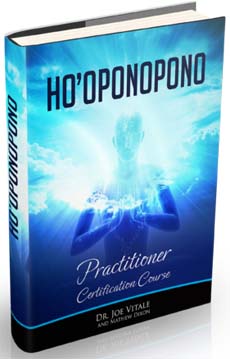
People have been asking him for it...
And now it's finally here...
Introducing the brand new Ho'oponopono Certification...
The most in-depth, complete, immersive training on the deeper secrets behind and beyond his best-selling books, Zero Limits and AT Zero.
Once you gain access, you'll discover raw footage of Dr. Joe Vitale and Dr. Hew Len sharing secrets never before released to the public.
- It blows away the "complexity" of breakthrough
- It destroys the shackles holding you back
- It heals the deepest of wounds and blocks...even the "impossible" ones.
Let's pull back the curtain and show you exactly how to master the true secrets of Ho'oponopono.
Friday, May 25, 2018
Inspirational Quotes by Jackson Brown Jr.
"Be brave. Even if you're not, pretend to be. No one can tell the difference.
Don't allow the phone to interrupt important moments. It's there for your convenience, not the callers.
Don't be afraid to go out on a limb. That's where the fruit is.
Don't burn bridges. You'll be surprised how many times you have to cross the same river.
Don't forget, a person's greatest emotional need is to feel appreciated.
Don't major in minor things. Don't say you don't have enough time. You have exactly the same number of hours per day that were given to Pasteur, Michaelangelo, Mother Teresa, Helen Keller, Leonardo Da Vinci, Thomas Jefferson, and Albert Einstein.
Don't spread yourself too thin. Learn to say 'no' politely and quickly.
Don't use time or words carelessly. Neither can be retrieved.
Don't waste time grieving over past mistakes Learn from them and move on.
Every person needs to have their moment in the sun, when they raise their arms in victory, knowing that on this day, at his hour, they were at their very best.
Get your priorities straight. No one ever said on his death bed, 'Gee, if I'd only spent more time at the office'.
Give people a second chance, but not a third.
Judge your success by the degree that you're enjoying peace, health and love.
Learn to listen. Opportunity sometimes knocks very softly.
Leave everything a little better than you found it.
Live your life as an exclamation, not an explanation.
Loosen up. Relax. Except for rare life and death matters, nothing is as important as it first seems.
Never cut what can be untied.
Never overestimate your power to change others. Never underestimate your power to change yourself.
Remember that overnight success usually takes about fifteen years.
Remember that winners do what losers don't want to do.
Seek opportunity, not security. A boat in harbor is safe, but in time its bottom will rot out.
Spend less time worrying who's right, more time deciding what's right.
Stop blaming others. Take responsibility for every area of your life.
Success is getting what you want. Happiness is liking what you get.
The importance of winning is not what we get from it, but what we become because of it.
When facing a difficult task, act as though it's impossible to fail."
– Jackson Brown Jr.
Monday, April 30, 2018
Get The Ability To Define Your Own Destiny!

That's right. I'm talking about the power to create or destroy whatever you want to...As You See Fit!
There is no other course out there like Magick Power. In fact, there has never been a similar course available to public.
I have to warn you though, mystics have tried to have this course banned...
I'm talking about some of the most powerful men and women of the world, that can literally take the site down any minute without warning.
All I can I guess, is if you can still get to the website you may have a chance...
Don't complain that you couldn't get in because you didn't take action. This is one of those things that you just need to take advantage of right away or be left out. It's up to you...
Friday, April 27, 2018
If You Read One Book This Year, Read THIS.
What do successful entrepreneurs and investors all have in common?
Eben Pagan has studied and interviewed hundreds of millionaire and billionaire entrepreneurs, and has built ten online brands and businesses to a million dollars in sales himself.
As he was studying these successful entrepreneurs and investors, he noticed that they had something in common: They were better at finding and creating opportunity in their lives.
They were also better choosing the best ones, then growing those opportunities to success.
Eben has invested the past year writing a book about how these successful people think and work, and he has just released it...

The book is titled simply "OPPORTUNITY".
Inside, you will learn:
• What opportunity is, how it works, and where to find it
• How to overcome fear of failure, so you can get more of what you want in your life
• What mental models are, and how to use them for estimating the value of an opportunity, comparing your opportunities to each other, and then choosing those most likely to bring you success and fulfillment
• How to find more opportunities in business, money, investing, health, happiness, relationships, and personal development
• The way to discover your greatest personal opportunity in life: How to overcome "opportunity shock" and avoid the paralysis that can come with having too many options
• How to become an innovator and a thought leader, so you can help others find their big opportunities in life.
• Why collaborating with others multiplies your power to find and develop opportunities
• How your emotional state influences your ability to take advantage of opportunity, and how to optimize your state to attract and capitalize on opportunity across different domains of your life
::: Get Your Copy Free During Launch :::
Eben is doing his launch right now, and he will send you a copy of this book for free—you just cover shipping and handling.
You get the book for free, by just paying the shipping (and you also get $197 worth of bonuses on top).
He also has a special bonus package worth $197 that includes 'live' training, downloads and other goodies worth $197, that you get as a gift when you order the book.
If you only read one new book this year, make sure that this is it!
Order it now, and learn how to find and create a lot more opportunities in your life.
Tuesday, April 24, 2018
Brand New NLP Training
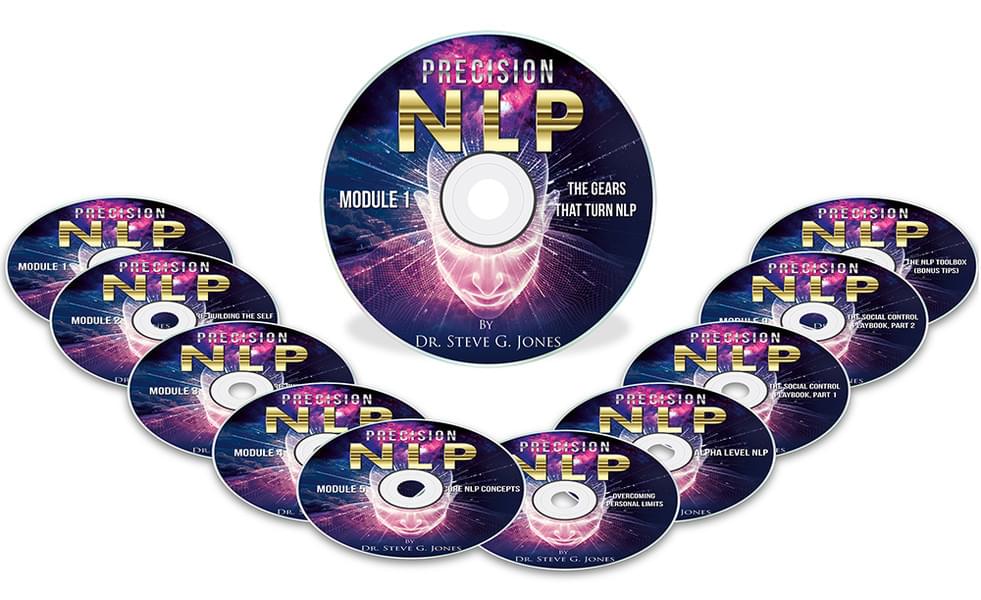
Message from Dr. Steve G. Jones:
"I have something brand new just for you.
NLP is like the blueprint to the mind.
I've used it for years to influence and control outcomes in my life.
Many people say it can be overwhelming.
That's why I want to tell you about Precision NLP.
This system has never been revealed before and I've been granted permission to share it with a handful of my subscribers.
Access the new NLP training here."


